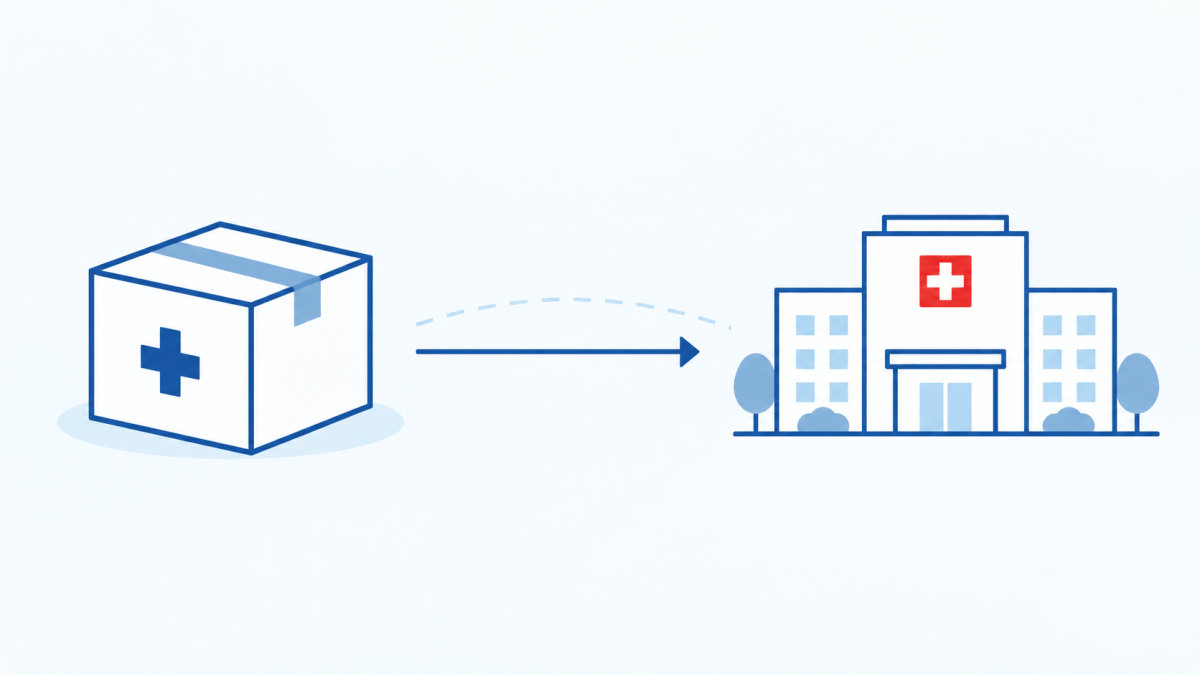
Must a Swiss hospital or medical practice register a CE-compliant medical device in swissdamed if it is sourced directly from the EU? Not automatically. The decisive factor is not the border crossing alone, but whether the device is placed on the market in Switzerland or used directly within the same legal entity.
Mandatory device registration in swissdamed raises new questions of regulatory classification in practice. It is often assumed that every medical device sourced from abroad must be registered in swissdamed by 1 January 2027 at the latest. However, this statement is too broad for direct sourcing by professionals and healthcare institutions.
Swissmedic distinguishes between placing a device on the market in Switzerland and direct use of a device sourced from abroad. This distinction determines whether a healthcare institution is considered an importer and whether the specific transaction requires device registration in swissdamed.
When is direct sourcing considered direct use?
This special case concerns professionals and healthcare institutions that source a device from abroad and use it directly without making it available on the Swiss market. For example, a hospital may order a medical device directly from a manufacturer in the EU and use it within the same legal entity to treat its own patients.
Internal distribution to several departments or sites may also remain within this situation, provided that these organisational units belong to the same legal entity. The decisive factor is therefore not only where the device is used, but which legal entity receives and uses it.
Direct use by the institution
- Sourcing from abroad
- Use by the healthcare institution
- No supply to another legal entity
- No placing on the market in Switzerland
- Healthcare institution does not become an importer
Supply within Switzerland
- Sourcing from abroad
- Supply to another legal entity
- With or without payment
- Placing on the market in Switzerland
- Importer obligations must be assessed
Why CE marking alone does not answer the question
CE marking is an important prerequisite, but it is not sufficient as the only check for the internal approval of a direct import. Under Art. 70 MedDO, the professional or healthcare institution using the device assumes responsibility for the conformity of the device sourced directly from abroad.
In practice, the institution should therefore document whether the device bears a conformity mark recognised in Switzerland and whether the prescribed conformity assessment procedure has been completed. Depending on the device, risk class and procurement situation, additional evidence and internal approvals may be required.
Important: “Not subject to registration as an importer” does not mean “without regulatory responsibility”. In a direct import for the institution’s own use, responsibility for checking conformity shifts to the healthcare institution. Swissmedic also highlights potential liability, vigilance and information risks.
What obligations remain for hospitals and medical practices?
Even if a direct import for the institution’s own use does not trigger device registration in swissdamed by the healthcare institution, the procurement process should be secured from a regulatory perspective. Depending on the situation, this includes in particular:
- checking the conformity mark and the prescribed conformity assessment procedure,
- checking the intended purpose, labelling and required device information,
- documenting the procurement decision and the evidence reviewed internally,
- ensuring vigilance, safety and traceability processes,
- observing additional UDI record-keeping obligations, particularly for class III implantable devices,
- reassessing the regulatory role as soon as devices are supplied to another legal entity.
For the specific direct import for the institution’s own use, a Swiss authorised representative is not mandatory under the therapeutic products law classification described by Swissmedic. However, because of the associated risks, Swissmedic recommends procurement without a Swiss authorised representative only in justified exceptional cases.
When does a healthcare institution become an importer?
The boundary is crossed when a device sourced from abroad is supplied to another Swiss legal entity. This may be the case, for example, where a central purchasing organisation or hospital procures devices and subsequently supplies them to a legally independent hospital. Whether the supply is made for payment or free of charge is not decisive for this classification.
This generally constitutes placing the device on the market, and the importing organisation must assess its role and the associated obligations. These may include registration as an economic operator with a CHRN and linking the organisation to the affected devices in swissdamed.
Importers do not register the UDI-DI themselves as a device. According to Swissmedic, importers link their actor to a device that has already been correctly registered, using the UDI-DI. The prior device registration is performed by the responsible manufacturer, Swiss authorised representative or authorised foreign manufacturer.
| Situation | Placing on the market in Switzerland? | Healthcare institution is the importer? | Register the UDI-DI itself? |
|---|---|---|---|
| EU → hospital → direct use on its own patient | No | No | No |
| EU → medical practice → direct use by the practice | No | No | No |
| EU → central procurement → internal department of the same legal entity | No | No | No |
| EU → hospital or purchasing company → another Swiss legal entity | Yes | Generally yes | No; the importer links itself to the registered device |
| Swiss importer or distributor → hospital | Already occurred upstream in the supply chain | Hospital: no | Hospital: no |
What does the deadline of 31 December 2026 mean?
Since 1 July 2026, mandatory swissdamed registration has applied to devices and systems and procedure packs placed on the market in Switzerland. A general transition period for device registration runs until 31 December 2026.
The frequently used statement “From 2027, only medical devices registered in swissdamed may be imported into Swiss hospitals” is therefore too broad. The correct position is: Devices placed on the market in Switzerland must generally be correctly registered in swissdamed. Direct sourcing by a professional or healthcare institution for immediate use by that same institution must be distinguished from this, because it does not constitute placing the device on the market in the situation described above.
Importers are also subject to a separate rule: they do not register the device themselves, but link their actor to the device that has already been registered. Under Swissmedic’s current schedule, the technical linking function is being rolled out in stages from autumn 2026. Missing links attributable solely to the function not yet being available are expected to be completed by 1 April 2027 after the function becomes available.
Five questions for an internal role assessment
- Who procures the device? A professional, hospital, purchasing organisation or independent trading company?
- Who uses the device? The procuring legal entity itself or another organisation?
- Is the device supplied onward? Even a free supply to another legal entity may be relevant.
- Is conformity sufficiently documented? CE marking, conformity assessment and device-specific evidence must be considered together.
- Who is responsible for swissdamed? The manufacturer or CH-REP for device registration; the importer for the CHRN and device linking; and the healthcare institution for its user and procurement obligations.
Frequently asked questions about direct imports and swissdamed
Must a Swiss hospital register every medical device sourced directly from the EU in swissdamed?
No. If the hospital uses the device directly and does not supply it to another legal entity, the situation described by Swissmedic does not constitute placing the device on the market in Switzerland. The hospital does not register the UDI-DI itself because of this transaction.
Is CE marking sufficient for a direct import?
CE marking alone does not replace a documented conformity check. For a direct import for its own use, the healthcare institution is responsible for ensuring that the device complies with the applicable requirements and that the prescribed conformity assessment procedure has been completed.
When does a hospital become an importer?
If a device sourced from abroad is supplied to another Swiss legal entity, with or without payment, this generally constitutes placing it on the market. The importer role, CHRN and further obligations must then be assessed.
Does a Swiss importer register the UDI-DI itself?
No. Swissmedic explicitly states that importers do not register devices themselves in swissdamed. They link their actor to a device that has already been registered, using the UDI-DI.
Does the exception continue to apply after 31 December 2026?
Yes, provided that the conditions for direct use by the same institution without placing the device on the market continue to be met. The transition period for device registration concerns devices placed on the market in Switzerland.
Assign swissdamed responsibilities correctly and transmit UDI data securely
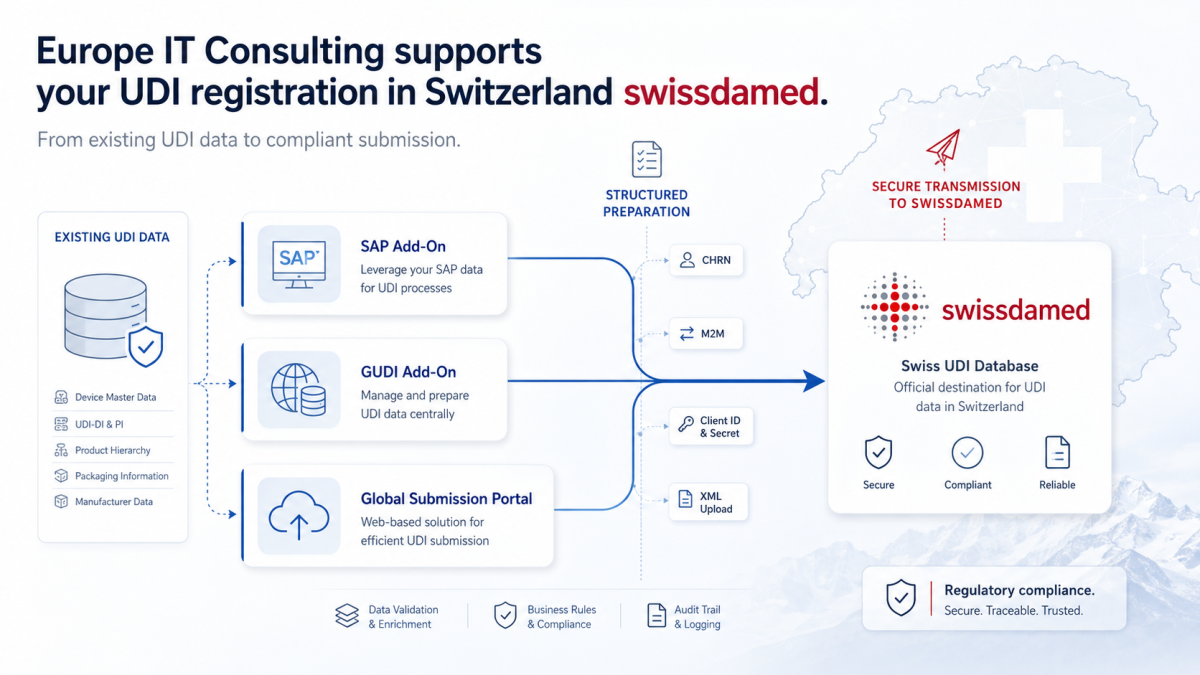
Regulatory role classification comes first: healthcare institutions, importers, manufacturers and Swiss authorised representatives have different responsibilities. Europe IT Consulting supports medical device companies with the regulatory classification of their UDI processes and with the structured validation and transmission of device data to swissdamed.
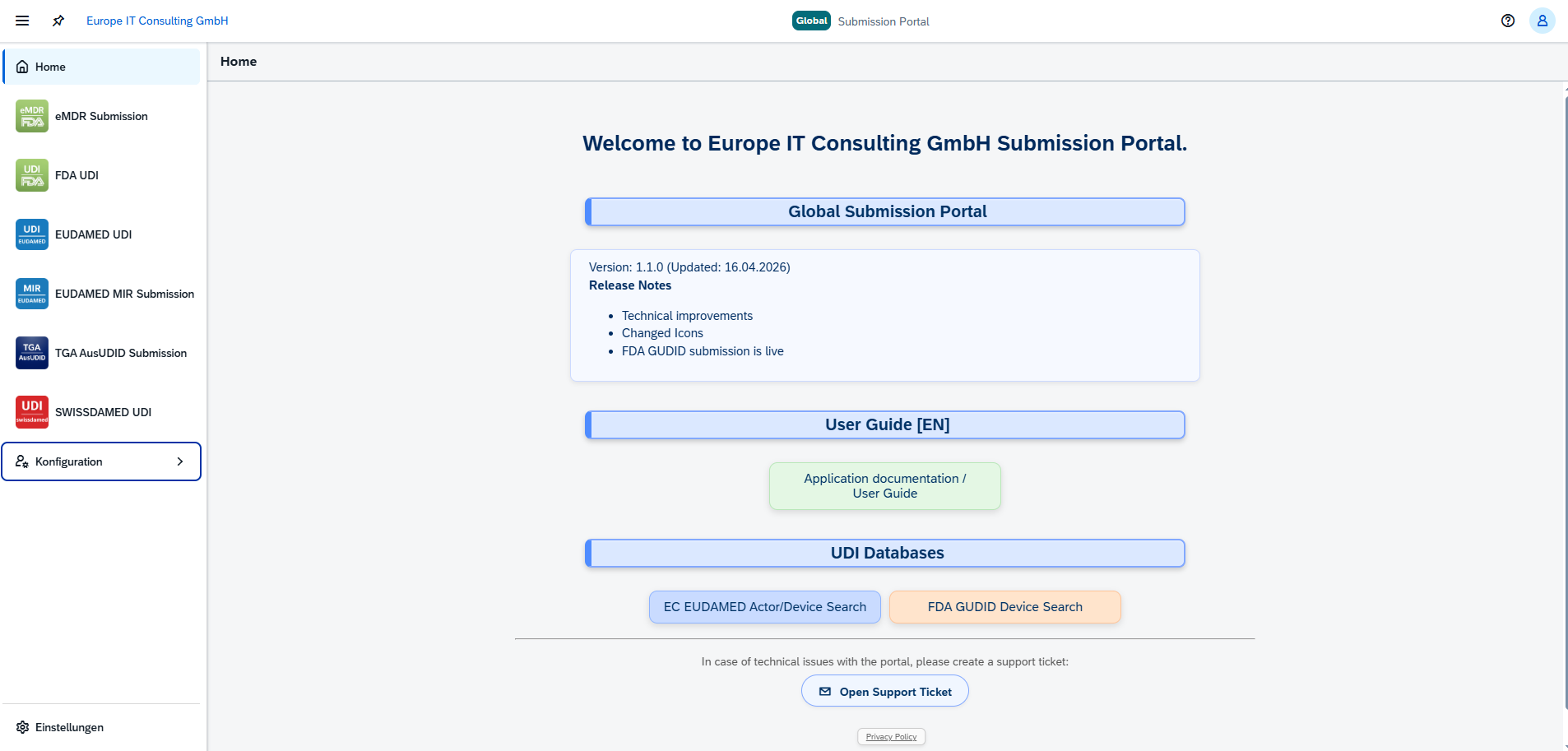
With the Europe IT Consulting Global Submission Portal (GSP), responsible manufacturers and Swiss authorised representatives can import UDI data from an authority-specific Excel template, pre-validate it, approve it and transmit it electronically to swissdamed.
Explore the Global Submission Portal
UDI and MedTech consulting
Sources and further information
- Swissmedic: Procurement of medical devices in healthcare institutions (PDF)
- Swissmedic: Obligations of importers in swissdamed
- Swissmedic: Questions and answers about swissdamed
- Fedlex: Medical Devices Ordinance (MedDO)
This article reflects the information available on 15 September 2026 and is intended as general professional guidance. It does not replace a legal or device-specific assessment of an individual case. The applicable legislation and current information published by Swissmedic remain authoritative.





Related Posts